Fortnite Duos: Coordinate Pressure Without Taking the Same Angle
Two players contribute more when their views and timing connect. Choose complementary positions, communicate readiness and keep a route to support each other when the opponent changes the fight.
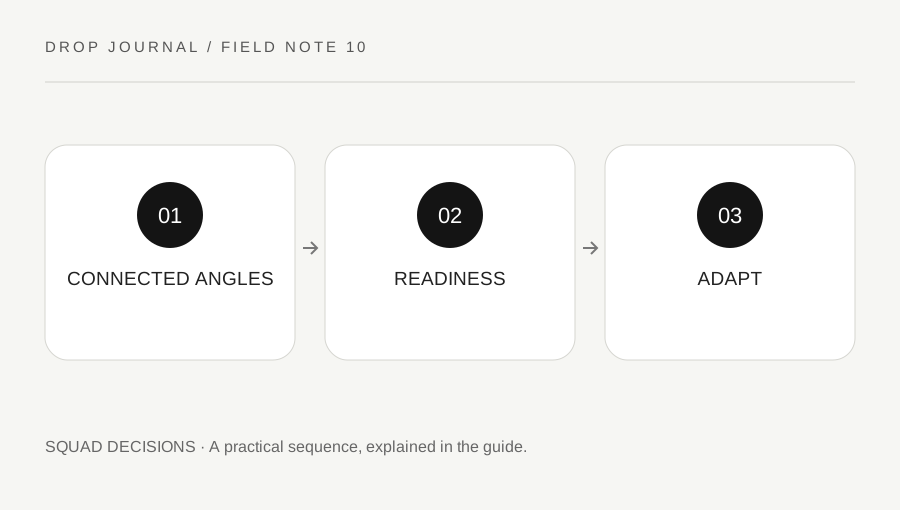
Original explanatory diagram. Examples illustrate a method or decision; they are not claims of personal testing.
Give each position a useful job
Before splitting slightly, state which area each player can see. A second angle is useful when it creates pressure the first position cannot provide while remaining close enough for a practical response. Distance alone does not make an angle good or bad.
Avoid both extremes: standing together in one narrow view can duplicate exposure, while separating beyond support range can turn a duo into two solo encounters. The right relationship depends on terrain, building permission, current equipment and the actual opponents.
Use the selected mode's rules. Recovery, construction and utility options may differ, so do not assume a familiar rescue or movement action will reconnect the pair. This article focuses on live pressure timing rather than the site's separate revive and recovery procedures.
Check readiness before creating the opening
A player repositioning, recovering or changing equipment may not be ready to act on early damage. Use a short clear check before one player commits. The information needed is practical: useful sightline, available action and next cover.
For a worked example, one player has a clean side view while the other is still moving between protection. Rather than opening pressure immediately and drawing attention to both routes, the pair waits until the second reaches the intended cover. This is a practice example, not a claim that waiting is correct in every urgent situation.
Keep calls concise during action. A location plus an intention can be more useful than a long explanation of how the angle was reached. If the view is uncertain, say so rather than making the partner plan around an opponent location you only guessed.
Use damage as information for the next choice
Early damage can support a push, continued pressure or a safer move. It does not automatically require chasing. Compare the opponent's cover, your partner's position and what crossing would expose before converting the opening into movement.
In building playlists, construction can alter the shared sightline quickly. In Zero Build, a terrain change or available utility can do the same. Update the call when the original angle disappears. A partner firing at an outdated location may no longer support the action you are taking.
If one player must reset, the other can choose pressure that supports that reset instead of extending farther. Do not promise that shooting alone guarantees protection; inspect the actual opponent response. The task is coordinating useful actions rather than maximizing the number of simultaneous weapon sounds.
Review the pair rather than blaming one final shot
After a short encounter, ask when both players could contribute and when the connection broke. Mark the movement or information change that created the gap. A missed shot may matter, but it may not explain why the partner could not see the target.
Choose one adjustment for the next match, such as confirming the supporting view before crossing or announcing when construction blocks the angle. Keep the practice compatible with normal teamwork and avoid demanding a rigid scripted role from a teammate who did not agree to it.
Finish with a shared sentence about the encounter: “We had two useful angles until the target moved behind the structure.” That gives both players a specific point to understand. A duo improves coordination by tracking its changing connection, not by assuming that being in the same party means every aggressive movement is automatically supported.
A practical checklist
Choices are saved in this browser. Reset them here or clear this site’s browser storage.
Questions that come up
Should both players always shoot the same target?
It depends on the encounter. The important point is whether the chosen pressure supports the shared objective and position.
Does being nearby guarantee support?
No. A wall, ridge or blocked sightline can prevent a nearby partner from contributing.
Should early damage always trigger a push?
No. Recheck cover, partner readiness and the route before committing.
References & scope
Background references checked on 18 October 2026. Worked examples and diagrams are original teaching material.